A monoflange valve is a critical component in modern instrumentation systems, especially where accurate pressure measurement, compact design, and high safety are required. Engineered to consolidate multiple valve functions into a single flange‑mounted unit, monoflanges eliminate the need for complex hook‑ups and improve operational reliability. Understanding how a monoflange works helps engineers design safer, more efficient systems across industries such as oil & gas, petrochemical, power, and marine.
What Is a Monoflange Valve?
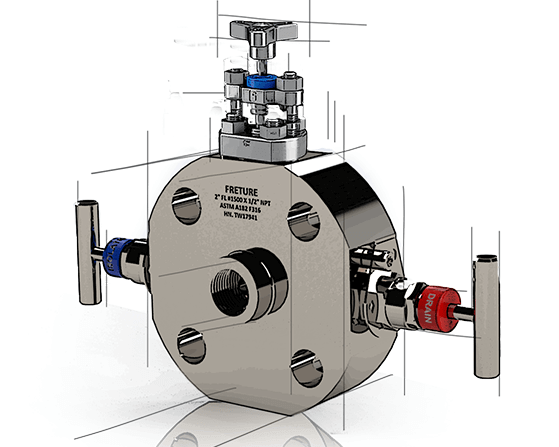
A monoflange is an integrated valve assembly that houses one, two, or three needle valves inside a single, compact flange body. This design replaces the traditional multiple‑valve manifold assemblies that use several individual valves, threaded connections, and external piping.
 |
| monoflange valve manufacturers in india |
By integrating these functions in one body, it reduces leak paths, saves space, minimizes weight, and simplifies installation — a major advantage in space‑constrained environments such as offshore platforms and control panels.
Core Working Principle
At the heart of a monoflange’s working lies internal passages and valve chambers machined within the body. These passages connect the process connection (where the fluid enters) to the instrument port (where a gauge or transmitter is attached).
Here’s how it functions in typical configurations:
1. Single Valve Configuration
A single monoflange Valve contains just one needle valve, offering basic isolation between the process and the instrument. This is suitable for simple applications where only shut‑off control is needed.
2. Block and Bleed (Two Valves)
In this configuration:
Valve 1 isolates the process fluid.
Valve 2 vents or bleeds the cavity between the isolation valve and instrument, allowing safe depressurization.
This arrangement enhances safety and enables instrument calibration or maintenance without removing the instrument.
3. Double Block & Bleed (Three Valves)
The most robust option for critical systems, the DBB monoflange Valve includes:
- Primary block valve (closest to process),
- Secondary block valve (closest to instrument),
- Bleed valve for depressurizing the cavity between the two blocks.
This design ensures redundant isolation. If the primary block fails to seal fully, the secondary block still isolates the fluid. The bleed valve then safely releases trapped pressure.
Internal Flow Mechanism
Inside the monoflange Valve body, specially drilled passages direct the fluid:
Process flow enters through the main inlet flange.
It encounters the first shut‑off valve — often needle‑type because of its fine control and excellent sealing properties.
When opened, fluid flows toward the second shut‑off valve.
If this valve is also opened, the instrument becomes connected to the process line.
When the first block closes and the instrument is isolated, the bleed valve can vent the trapped fluid to atmosphere or a safe drain line.
This internal logic ensures precise control and safe operation, even in fluctuating process conditions.
Why Monoflanges Matter
The design and function of a monoflange address several industry‑critical requirements:
Reduced Leak Paths : By replacing up to a dozen threaded connections with a single forged body, monoflanges substantially decrease potential leakage points. This improves safety and lowers fugitive emissions
Compact Footprint : Compared to traditional valve clusters, a monoflange takes up far less space, reduces system mass, and minimizes vibration stresses — making it ideal for offshore rigs, skid‑mounted systems, and crowded utility corridors.
Improved Safety : The double isolation and bleed design in DBB configurations ensures instruments can be isolated, depressurized, and maintained safely without exposing operators to process fluids.
Faster Installation and Lower Costs
With fewer components to install and maintain, monoflanges valve reduce installation time, material costs, and future maintenance expenditures.
Common Uses & Industry Applications
Monoflanges valve function as the interface between the process line and measurement instruments like pressure transmitters, differential pressure gauges, and flow meters. Their robust performance makes them suitable for:
- Oil and Gas processing
- Petrochemical and refinery systems
- Power generation plants
- Offshore platforms
- Marine and chemical industries
- Pharmaceutical processing
In applications where vibration, temperature swings, or corrosive media pose challenges, monoflanges deliver consistent performance and long service life.
Understanding how a monoflange valves works — from its internal passages and valve logic to its functional advantages — reveals why it’s an industry‑trusted solution for safe, compact, and efficient instrumentation control. By combining multiple valve functions within a single, engineered flange body, monoflanges improve system reliability, reduce installation complexity, and enhance plant safety across diverse industrial applications.

No comments:
Post a Comment